Media
Legal checks before publishing an investigation: a 12-point checklist for UK reporters
You have the documents, the interviews and a draft that took months. The last thing you want is a legal letter landing on a Friday afternoon. But the final hours before an investigation goes live are where most avoidable mistakes happen: a phrase that overstates what the file proves, a right of reply sent too late, a photograph used without a licence, a detail about someone's health that adds nothing.
This checklist will not replace a media lawyer. It is the working list you run through first, so that when you do take advice, you and your lawyer are looking at the same set of risks. Defamation, privacy, contempt, copyright and data protection each follow different rules. All five should be considered before you press publish.
1. Defamation: the accuracy of your strongest claims
Defamation remains the claim most likely to land. Under the Defamation Act 2013, a statement must cause or be likely to cause serious harm to reputation to be actionable, and for a body trading for profit, serious financial loss is the test. The defence you will probably rely on is truth, honest opinion or publication on a matter of public interest.
That has an obvious practical consequence: every defamatory assertion you publish needs to be supported by evidence in the file. Where it is not, it must be attributed, softened or cut.
- List each allegation and the document or witness that proves it. If there is no answer, the claim is not ready.
- Distinguish fact from opinion in the text, not just in your head.
- Check headlines, standfirsts, captions, subheadings and social posts. A defensible article can be undone by a caption.
- Take care with "fraud", "corrupt" and "criminal". Under English law, these imply criminal conduct; use them only where the evidence supports it.
The right of reply is your best protection
Write to every person and organisation facing serious allegations. Put the specific claims to them, give a clear deadline, and record how you made contact. Phone calls are useful but thin on the record, so follow up by email. What counts is that the person had a real chance to respond, that you considered what they said, and that the article reflects it where relevant. If publication is genuinely urgent, say so in writing, and explain why.
2. Privacy and data protection
Privacy is a separate claim. A person can succeed in misuse of private information even where what you published is true, if they had a reasonable expectation of privacy and that expectation outweighs the public interest in publishing. The strongest privacy complaints usually concern health, sexual life, family life, addresses, private correspondence and grief.
UK data protection law, through the UK GDPR and the Data Protection Act 2018, adds a further layer. Journalism has exemptions, but they are not blanket: they depend on processing being for journalism and on a reasonable belief that publication is in the public interest and that complying with the relevant provisions would be incompatible with the special purposes. Document your reasoning.
- For each private detail, ask what it adds to the story. If the answer is colour rather than substance, cut it.
- Prefer the least intrusive version of the truth: specifics only where they matter.
- Be careful with material from social media. Publicly visible is not automatically publishable.
- Check for inadvertent identification: house numbers, car registrations, voice recordings, document metadata, reflections in photographs.
The same applies to material from leaked or confidential documents. A document may be genuine and newsworthy and still be protected by confidence or copyright. There is a public interest defence in each case, but it is assessed on the facts, so record why publication is justified. Seek legal advice before relying on it.
3. Contempt of court: check the active stage
Contempt can bite without anyone intending harm. The strict liability rule under the Contempt of Court Act 1981 applies once proceedings are active, which for criminal cases generally begins at arrest, charge or the issue of a summons or warrant. At that point, anything that creates a substantial risk of serious prejudice or impediment to the proceedings can lead to sanctions, and a finding does not require a defendant's reputation to be damaged.
Risk is highest in jury trials. In practical terms:
- Ask the court or the police press office whether anyone has been arrested or charged before you publish.
- Avoid describing anyone as guilty, even in quotation, and steer clear of previous convictions or witness interviews about disputed facts once proceedings are active.
- Watch photographs and footage: identification of a defendant can be a serious problem.
- Remember reporting restrictions can be imposed, including under section 4(2) of the Act, and that they apply to social and archive content too.
4. Copyright and source material
There is no general "news" exception allowing you to reproduce whatever you like. Quoting from documents is usually safest: use short extracts, credit the source and make sure the quotation is genuinely needed to support the story. Reproducing a whole document, or a substantial part, is a different matter and should be discussed with a lawyer.
Photographs are the most common trap. Agency invoices can be steep, and a picture lifted from a social media profile is no safer than one lifted from a website. Check licences, keep permissions in writing, and keep a note of where every image, clip and graphic came from.
5. The final read-through
Do this with fresh eyes, and ideally not alone. Read the piece as the person it criticises would read it. Then work through the file one last time.
- Confirm active proceedings and any reporting restrictions in writing.
- Match each defamatory claim to its evidence, and make sure the wording does not outrun it.
- Confirm every right-of-reply letter, deadline and response is documented.
- Justify each private detail and each document extract in the file.
- Check licences and credits for every image, clip and graphic.
- Keep the legal review, notes and correspondence in one place, accessible after publication.
Balance tests and public interest arguments are judgement calls, and the experienced people who make them regularly can usually help within a day or two if you brief them early. Build that time into the schedule rather than discovering the need for it at 6pm.
Assume a complaint is coming and assemble the file that answers it. If the evidence, the fairness and the paperwork hold up, you can publish with confidence. And where a story touches on health, financial or legal allegations, a short note at the end of this process to your editor and a media lawyer is not caution for its own sake. It is the difference between a story that stands and one that has to be corrected.
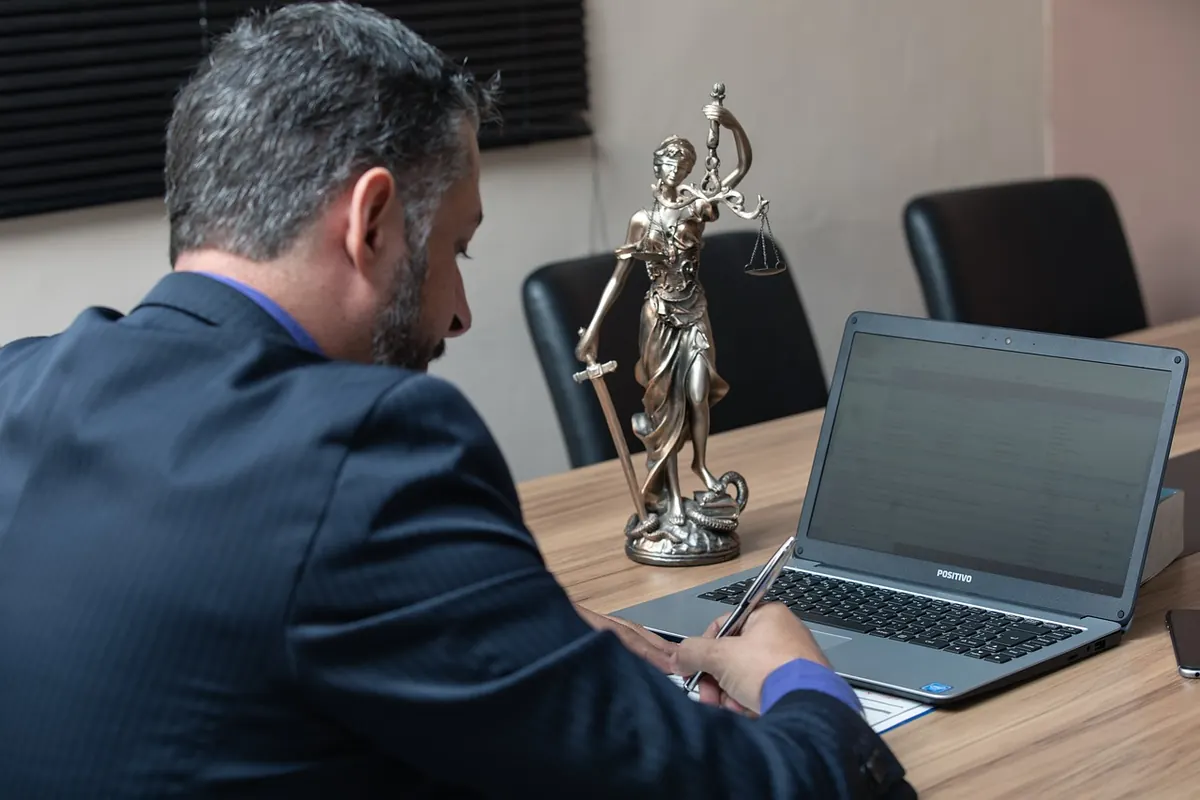
Photo: advogadoaguilar / Pixabay
Related Articles